
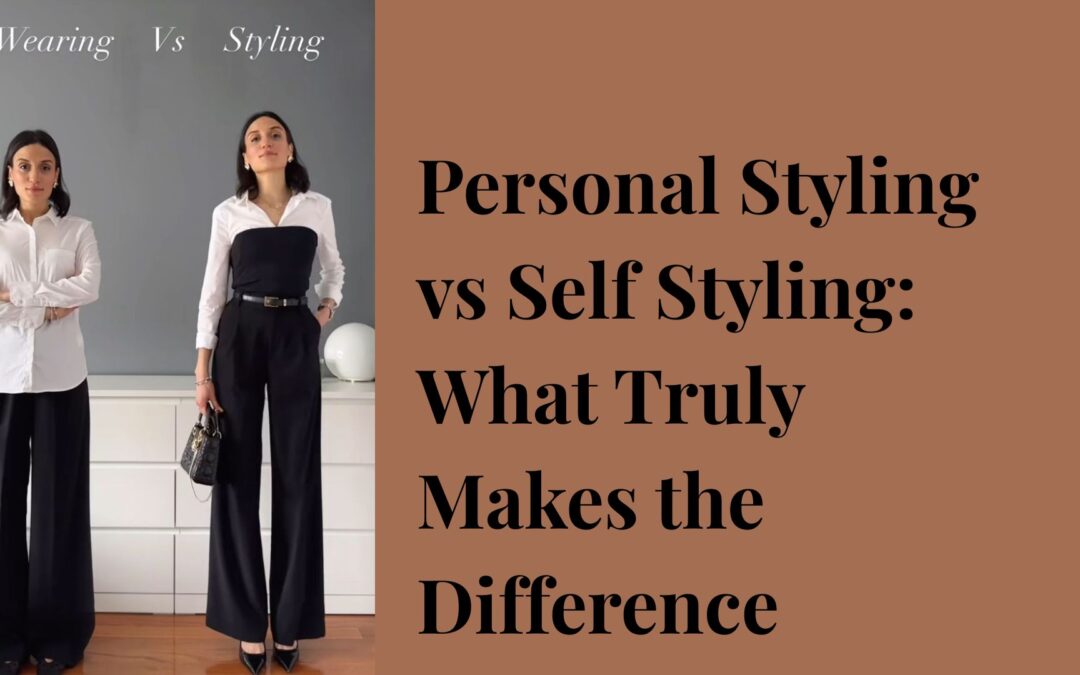
Have you ever looked at a wardrobe full of clothes and felt like you had absolutely nothing to wear? This is a universal frustration that transcends geography, yet it feels particularly poignant in a fashion-forward city like Chennai. Whether you are heading to a high-stakes boardroom meeting in Nungambakkam or a grand wedding in Mylapore, the way you present yourself speaks before you do.
The choice usually boils down to two paths: self-styling or professional intervention. While everyone practices self-styling daily, the rise of personal styling in Chennai suggests that more people are seeking something deeper than just “putting on clothes.” There is a profound difference between selecting an outfit and curating an identity.
In this comprehensive guide, we will explore the nuances of self-styling versus professional styling, why the latter is becoming a necessity for the modern professional, and how a personal stylist in Chennai can transform not just your wardrobe, but your life.
Contents
- 1 The Philosophy of Self-Styling: Creative Independence
- 2 What is Personal Styling? Moving Beyond the Surface
- 3 Technical Differences: Subjectivity vs Objectivity
- 4 Why Personal Styling in Chennai is a Growing Trend
- 5 The ROI of Hiring a Personal Stylist in Chennai
- 6 The Step-by-Step Process of a Professional Consultation
- 7 Deep Dive: Color Theory and Seasonal Analysis
- 8 The Climate Challenge: Fabric Science in Chennai
- 9 The Psychology of Style: Enclothed Cognition
- 10 Case Study: The Corporate Transformation
- 11 Building a Sustainable Wardrobe
- 12 How to Choose the Right Personal Stylist in Chennai
- 13 The Future of Fashion in Chennai
- 14 Conclusion: Investing in Your Best Self
The Philosophy of Self-Styling: Creative Independence
Self-styling is the most common form of fashion expression. It is what we do every morning when we stand in front of the mirror. It is driven by personal taste, mood, and the immediate environment. For many, self-styling is a fun, creative outlet. You follow trends, watch YouTube tutorials, and browse social media boards to find inspiration.
The Benefits of Doing It Yourself
- Direct Expression: Your style is a direct reflection of your personality. No one knows your comfort level better than you do.
- Cost-Effectiveness Initially: On the surface, self-styling costs nothing but the price of the garments.
- Experimental Freedom: You can try on a dozen different looks in the privacy of your home without feeling judged.
The Limitations of the DIY Approach
Despite the creative freedom, self-styling often hits a ceiling. Most people tend to buy the same types of clothes repeatedly. If you look at your closet right now, you might notice a sea of similar silhouettes or colors. This happens because we are biologically wired to seek comfort and familiarity.
Furthermore, self-styling is often reactive rather than proactive. You buy a dress because you have an event tomorrow, not because it fits into a long-term wardrobe strategy. This leads to a fragmented closet where pieces do not “talk” to each other. This is precisely where the expertise of personal styling in Chennai becomes a game-changer.
What is Personal Styling? Moving Beyond the Surface
When people hear the term “personal stylist,” they often imagine celebrities on a red carpet. However, the modern personal stylist in Chennai works with everyday professionals, entrepreneurs, and individuals who want to align their external image with their internal ambitions.
Professional styling is a data-driven art form. It is not about telling you what is “cool” or “trendy.” It is about analyzing your unique physical attributes and lifestyle requirements to create a cohesive visual language.
The Pillars of Professional Styling
- Color Analysis: This is the science of determining which hues harmonize with your skin undertone, eye color, and hair color. A professional can identify if you are a “Cool Summer” or a “Warm Autumn,” ensuring your clothes make you look vibrant rather than washed out.
- Body Architecture: Instead of focusing on size, a stylist looks at proportions. They understand how to use fabric, lines, and patterns to balance your silhouette.
- Psychology of Dress: Professional styling considers the message you want to send. Are you trying to appear authoritative, approachable, or creative?
Technical Differences: Subjectivity vs Objectivity
To understand why the results of personal styling in Chennai differ so vastly from self-styling, we need to look at the technical aspects.
1. Subjective Bias vs Expert Insight
When you style yourself, you are viewing your reflection through a lens of bias. You might focus on a specific feature you dislike, which causes you to choose clothes that “hide” you rather than “enhance” you.
A personal stylist in Chennai provides an objective, third-party perspective. They see your proportions as a canvas. They are not bogged down by your insecurities: they are focused on your potential. This objectivity allows for the selection of pieces you might have never considered but which ultimately look spectacular on you.
2. Trend-Driven vs Strategy-Driven
Self-styling is often heavily influenced by what is currently on the racks at major shopping centers like Phoenix Marketcity. If neon is in, you buy neon, regardless of whether it suits your skin tone.
A professional approach to personal styling in Chennai is strategic. It focuses on building a “capsule wardrobe” where every item serves a purpose. A stylist thinks about the investment value of each piece.
3. Time Management
How much time do you spend scrolling through shopping apps or wandering through malls feeling overwhelmed? For the busy professional in Chennai, time is the most valuable currency.
When you hire a personal stylist in Chennai, you are outsourcing the labor of curation. They do the pre-shopping, the research, and the filtering. You are presented with a refined selection of options that already fit your criteria, saving you dozens of hours every month.
Why Personal Styling in Chennai is a Growing Trend
Chennai is a city of beautiful contradictions. It is deeply rooted in tradition, yet it is a booming hub for IT, automobiles, and global trade. This unique cultural blend requires a specific kind of wardrobe versatility.
The Cultural Context
In Chennai, one might need to transition from a traditional silk saree for a morning function to a sharp, western corporate look for an afternoon meeting. Navigating these transitions requires an expert hand. A personal stylist in Chennai understands the nuances of local textiles, like the weight of Kanchipuram silk versus the breathability of organic cotton, and how to style them for modern contexts.
The Climate Factor
The Chennai heat is a major factor in styling. You cannot simply follow European or North American fashion trends because the humidity will make them unbearable. Professional personal styling in Chennai focuses on “smart fabrics” that look high-end but remain functional in 35-degree weather. This local expertise is something a global fashion blog simply cannot provide.
The ROI of Hiring a Personal Stylist in Chennai
Many people view hiring a stylist as a luxury. However, when you break down the numbers, it is often a savvy financial investment.
Stopping Wardrobe Waste
Think about the items in your closet with the tags still on them. Think about the shoes that hurt your feet or the shirt that just does not sit right. These are “dead investments.”
A personal stylist in Chennai ensures that every rupee spent on clothing is a rupee well-spent. By identifying exactly what you need, they prevent impulse purchases and mismatched items. In the long run, the fee of a stylist is often covered by the money saved on avoided mistakes.
The Confidence Dividend
The psychological impact of being well-dressed is documented in a concept called “enclothed cognition.” When you know you look good, your posture changes, your speech becomes more confident, and you take more risks. This “confidence dividend” can lead to better performance at work and more positive social interactions.
To visualize the financial logic, consider the formula for Cost-Per-Wear:
Cost Per Wear = {Total Cost of the Item} / {Number of Days Worn}
A stylist helps you choose items where the denominator (Number of Days Worn) is high, making your expensive purchases actually more “affordable” over time than cheap, disposable fashion.
The Step-by-Step Process of a Professional Consultation
If you have never worked with a personal stylist in Chennai, you might be curious about what the process actually looks like. It is much more than just a shopping trip.
1. The Style Discovery
This initial phase involves a deep dive into your lifestyle. A stylist will ask about your daily routine, your career goals, and your style icons. They might use mood boards to align their vision with your preferences.
2. Wardrobe Detox
Before adding new things, a personal stylist in Chennai will often look at what you already own. This is a “keep, toss, or tailor” session. You would be surprised how many “old” items can be revitalized with simple alterations or new pairings.
3. Body and Color Mapping
Using professional tools, the stylist determines your color palette and body shape. This is the technical foundation of your new look.
4. The Curated Shop
The stylist will either shop for you or accompany you on a shopping trip. They will have pre-selected items at various boutiques across the city, ensuring a seamless experience.
5. The Lookbook
Finally, the stylist creates a digital or physical lookbook. This is a guide that shows you exactly how to pair your new and old items to create dozens of different outfits. It takes the guesswork out of getting dressed every morning.
Deep Dive: Color Theory and Seasonal Analysis
One of the most profound differences between self-styling and working with a personal stylist in Chennai is the application of color theory. Most people choose colors they “like,” but those colors may not necessarily like them back.
The Four Seasons System
Professional stylists often categorize clients into seasons based on their undertone (warm or cool) and their contrast level (light or dark).
| Season | Characteristics | Ideal Colors |
| Spring | Warm undertone, light hair/eyes | Peaches, warm yellows, bright teals |
| Summer | Cool undertone, low contrast | Lavenders, powder blues, soft grays |
| Autumn | Warm undertone, rich/deep colors | Rust, olive green, mustard yellow |
| Winter | Cool undertone, high contrast | Royal blue, emerald green, stark black |
In the context of personal styling in Chennai, this analysis is vital. The intense sunlight in South India can make colors look different than they do in artificial mall lighting. A professional ensures that your wardrobe works in the real world.
The Climate Challenge: Fabric Science in Chennai
In a city where the “feels like” temperature often defies logic, the technical composition of your clothing is just as important as the aesthetic. For those navigating the unique environment of South India, understanding fabric science isn’t just a fashion choice it is a survival strategy.
Here is a brief breakdown of why the climate challenge is the ultimate test for personal styling in Chennai:
1. The Humidity Trap
Chennai’s humidity creates a “sauna effect” where moisture cannot easily evaporate from the skin. When you practice self-styling without technical knowledge, you might be drawn to the crisp look of synthetic blends or heavy silks. However, these fabrics often act as insulators, trapping heat and perspiration against your body. A personal stylist in Chennai prioritizes “breathability,” selecting fabrics with a loose molecular structure that allows air to circulate.
2. The “Plastic Bag” Syndrome: Synthetics vs. Naturals
Most fast-fashion items found online are made of polyester or nylon. Because these are essentially plastic-based fibers, they have zero absorbency. In the Chennai heat, wearing these leads to discomfort, skin irritation, and the dreaded “wilted” look by midday.
Expert personal styling in Chennai pivots toward the “Holy Trinity” of tropical fabrics:
- Linen: The undisputed gold standard for its heat-conducting properties.
- Long-staple Cotton: For durability and moisture absorption.
- Tencel/Lyocell: A modern, sustainable favorite that is cooler than linen and incredibly soft on humid skin.
3. Weave Architecture
It isn’t just the fiber; it is how it’s woven. A personal stylist in Chennai looks for specific weaves like Seersucker or Chambray. These fabrics are engineered to sit slightly away from the skin, creating tiny air pockets that facilitate cooling. Self-styling often overlooks this “structural” cooling, leading to clothes that cling uncomfortably the moment you step out of an AC environment.
The Professional Advantage
A personal stylist in Chennai acts as a climate consultant. They ensure that your “Power Suit” or “Grand Saree” isn’t just visually stunning, but technically equipped to handle a 38°C afternoon with 80% humidity. They help you build a wardrobe that maintains its crispness and dignity, even when the weather is doing its best to do the opposite.
The Stylist’s Fabric Guide
A personal stylist in Chennai will prioritize natural fibers and specific weaves that facilitate airflow.
- Linen: The king of summer fabrics. It can absorb up to 20% of its weight in moisture before feeling damp.
- Cotton-Silk Blends: Perfect for traditional functions where you need the sheen of silk but the comfort of cotton.
- Seersucker: A puckered fabric that stays away from the skin, allowing for maximum ventilation.
- Tencel: A modern, sustainable fiber that is softer than silk and cooler than linen.
Understanding these technicalities is a core part of personal styling in Chennai. It ensures that your style is not just aesthetic, but also practical.
The Psychology of Style: Enclothed Cognition
Why does it matter if you are styled or just “wearing clothes”? Research into “enclothed cognition” suggests that the clothes we wear have a measurable impact on our psychological processes.
When you wear a suit that has been professionally selected to fit your body perfectly, your brain perceives you as more authoritative. This is not just about how others see you: it is about how you see yourself. A personal stylist in Chennai helps you choose “power garments” that act as a psychological armor for your daily challenges.
The Impact on Performance
- Abstract Thinking: Studies show that formal clothing can encourage broader, more abstract thinking.
- Attention to Detail: When you wear a “lab coat” (or a highly structured professional outfit), your attention to detail increases.
- Social Confidence: Knowing there are no “fit issues” or “color clashes” removes a layer of social anxiety.
Case Study: The Corporate Transformation
Consider a mid-level manager in Chennai’s thriving tech sector. For years, he practiced self-styling, wearing ill-fitting chinos and generic blue shirts. He felt he was being overlooked for leadership roles.
He decided to invest in personal styling in Chennai. His stylist identified that he was a “Deep Autumn” and that his current shirts were too “cool” for his complexion, making him look tired. They switched his wardrobe to rich earth tones and structured blazers.
The result? Within six months, he reported feeling more confident in meetings. His peers began to treat him with more deference. The clothes did not do the work, but they changed the way the manager carried himself, which in turn changed the perception of his colleagues.
Building a Sustainable Wardrobe
In 2026, fashion is moving away from “fast” and toward “intentional.” Self-styling often contributes to the fast-fashion cycle because it relies on quick, trendy fixes.
Personal styling in Chennai promotes sustainability. By choosing high-quality pieces that are perfectly suited to you, you reduce the need to constantly buy new items. A professional stylist encourages you to:
- Buy Less, Choose Well: Invest in a few “hero” pieces.
- Support Local Artisans: Chennai has a rich history of handlooms and bespoke tailoring. A stylist connects you with these local gems.
- Prioritize Longevity: Choosing fabrics and constructions that last for years rather than months.
How to Choose the Right Personal Stylist in Chennai
If you are ready to take the leap, how do you find the right partner for your style journey? Here are a few things to look for:
1. Portfolio and Aesthetic
Look at their previous work. Does their style resonate with you? While a good stylist is versatile, they often have a signature “finish” to their work.
2. Local Knowledge
Ensure they understand the Chennai landscape. They should know where to find the best bespoke tailors in T. Nagar and the most unique boutiques in Alwarpet or Khader Nawaz Khan Road.
3. Communication Style
You will be spending several hours in a very personal space (your closet). You need to feel comfortable and heard. A personal stylist in Chennai should be a coach, not a critic.
4. Specialization
Some stylists focus on corporate branding, while others specialize in bridal or occasion wear. Choose one that aligns with your current needs.
The Future of Fashion in Chennai
As we look toward the future, the demand for personal styling in Chennai is only set to increase. In an era of social media and constant digital presence, our visual identity has become our “personal brand.”
Whether we like it or not, people make snap judgments based on appearance. By moving from self-styling to a professionally guided approach, you are taking control of that narrative. You are ensuring that the world sees exactly who you are: a person of substance, style, and intentionality.
The difference between self-styling and personal styling is the difference between “getting by” and “standing out.” It is the transition from a wardrobe that is a source of stress to a wardrobe that is a source of power.
Conclusion: Investing in Your Best Self
Personal styling is not just for the elite: it is for anyone who wants to simplify their life and amplify their presence. While self-styling has its place in daily creative play, the strategic depth offered by a personal stylist in Chennai is what creates a truly impactful image.
By understanding your colors, your proportions, and the specific needs of the Chennai environment, a professional stylist turns your wardrobe into a tool for success. You stop fighting with your clothes and start wearing them with purpose.
The journey to a more confident you is not about changing who you are: it is about refining how the world see you. In a city as vibrant as Chennai, make sure your style is as dynamic as your spirit.
Ready to transform your image?
If you are tired of the “nothing to wear” cycle and want to discover a style that truly reflects your potential, it might be time to stop guessing. The journey to a more confident you starts with a single conversation.